Showing posts with label Spyker. Show all posts

Thursday, January 19, 2012

World Luxury Association Names Top 10 Car Brands


In a glitzy event held in Beijing, China, this month, the World Luxury Association (WLA), which is a non-profit research organization, named its Top 100 most valuable luxury brands of the year.

In the automotive field, the Top 10 premium car brands included some of the usual suspects such as Rolls-Royce, Bentley, Ferrari and Lamborghini along with some surprise entrants like Saab's former owner Spyker and Koenigsegg. Not that it matters any more, but Daimler's Maybach brand didn't make the cut.

Read more »

Tuesday, July 26, 2011

Saab Delays Payments to White-Collar Employees


When it comes to Saab, it seems that for every dollop of good news that trickles out from Sweden there are multiple bad news.

On Tuesday, the cash-strapped Swedish automaker said that its white-collar workers will not receive their next payment (at least not on time) because the company has not yet been paid by its investors.

Read more »

Wednesday, June 29, 2011

More Good News for Saab as Swedes Receive €25 Million Loan


Another day, another new story for Svenska Aeroplan Aktiebolaget –or, as you might know it, Saab. The Swedish company announced on Wednesday that it has entered a €25 million convertible bridge loan from Gemini Investment Fund Limited.

The loan’s annual interest is 10% and the conversion price is €1.38 per share, while Saab can at any time repay the loan, presumably when the expected Pang Da and Youngman Lotus funding is received, without a penalty.

Read more »

Thursday, June 23, 2011

Saab Says it Can’t Pay Workers, Company’s Survival in Doubt


New clouds are forming over Saab as the automaker’s parent company, Swedish Automobile N.V., formerly known as Spyker Cars N.V., said on Thursday it will be unable to pay its 3,800 employees their wages because it has not yet obtained the necessary short-term funding.

Swedish Automobile said it and Saab “are in discussions with various parties” to secure short-term funding, including through a sale and lease-back of Saab’s real estate assets.

Read more »

Tuesday, June 14, 2011

Vladimir Antonov Withdraws Proposal to Buy and Leaseback Saab Property


The ink has barely dried on Saab’s latest attempt to form a preliminary deal with China’s Pang Da Automobile and Youngman, and the Swedish company is faced with yet another problem as Russian investor Vladimir Antonov has withdrawn his proposal to buy and leaseback Saab property.

"The property sale is now being discussed with external investors," said Lars Carlstrom, Antonov's representative in Sweden. However, Carlstrom noted that the Russian banker was still interested in becoming a shareholder in Saab’s parent company Spyker Cars NV.

Read more »

Monday, June 13, 2011

Saab Signs Three-Way Deal with China’s Pang Da and Zhejiang Youngman Lotus Automobile


Lately, it seems whenever there’s a problem with production at Saab’s Trollhattan plant, the Swedish automaker’s parent company Spyker Cars N.V. announces a new deal with a Chinese company.

Today, Spyker signed a non-binding memorandum of understanding (MOU) with two Chinese firms, Pang Da Automobile Trade Co., Ltd (Pang Da) and Zhejiang Youngman Lotus Automobile Co., Ltd. (Youngman), which if approved by regulators, could see the company falling into the control of Chinese hands. We'll remind you that Saab had previously signed a deal Chinese firm Hawtai but it failed to go through Chinese regulators.

Read more »

Thursday, June 9, 2011

Saab Temporarily Suspends Production Again while it Seeks Parts


The on-off production drama over at Saab’s Trollhättan facility in Sweden continues as the troubled automaker said Wednesday that it temporarily halted production due to a lack of components from its suppliers only two weeks after resuming making cars following a seven-week shutdown.

Saab said that it anticipated production hiccups in the start-up phase, as the supply chain still is not fully operational with some suppliers holding back until they get paid and others trying to re-stock.

Read more »

Sunday, May 1, 2011

2011 Spyker C8 Aileron Spyder Review

Spyker Cars, manufacturer of exclusive, hand-crafted sports cars since 2000, today introduced the first prototype of the Spyder version of its all-new second-generation sports car, the Spyker C8 Aileron. The Spyker C8 Aileron Spyder was unveiled at the Spyker lounge on Peter Hay Hill on Saturday, and subsequently displayed on the concept lawn at the 59th Pebble Beach Concours d'Elegance on Sunday.
Spyker Cars announced the development of a convertible C8 Aileron Spyder in March at the Geneva Auto Show, during the introduction of the production version of the Spyker C8 Aileron. The car presented today is the first prototype for the open-top model, scheduled to go into production in the first half of 2010.


'Spyker Cars has taken the next step in our short but intense history with the launch of our second-generation sports car,' said Victor R. Muller, Spyker Cars' founder and Chief Executive Officer. 'We are currently presenting the first Spyker C8 Ailerons to customers, dealers and press around the world, and the response has been very enthusiastic.'

'The C8 Aileron Spyder is a logical extension to our range of vehicles, since we have both hard-top and convertible versions of the short-wheelbase model,' said Muller. 'The Aileron Spyder will offer open-top motoring along with all the usual Spyker characteristics, striking aviation-inspired styling and hand-crafted quality, based on the exclusive use of noble materials.'

The Spyker C8 Aileron Spyder

The Spyker C8 Aileron Spyder sports a high-quality, semi-automatic canvas soft-top. The roof's operation is electric/hydraulic, secured by one central latch operated manually.

Once folded, the soft-top is totally enclosed within the body of the car, allowing for an undisturbed profile. The roof retracts under an aluminium tonneau, with two buttresses upholstered in quilted Hulshof leather (matching the car's interior) and featuring the company's motto 'Nulla Tenaci Invia Est Via' ('For the tenacious, no road is impassable'). The soft top has a glass rear window and is available in eight colours.

The Aileron Spyder features a luggage rack, CNC-machined from solid billets of aluminium, mounted immediately behind the roll hoops, on which a wing-shaped aluminium case is strapped. The case is trimmed in the same quilted leather as the interior and buttresses.


Spyker C8 Aileron: the new-generation Spyker

The Spyker C8 Aileron is an advanced mid-engine, two-seat sports car, featuring a longer wheelbase than Spyker's existing sports cars, the C8 Laviolette and convertible C8 Spyder. The Aileron is characterized by a distinctive design, lightweight all-aluminium body construction and an uncompromising engineering package. The Spyker C8 Aileron is hand-crafted, using only the finest bespoke materials to create a unique automotive statement.

The Aileron features an all-aluminium V8 engine producing 400 bhp and generating 354 lbs of torque at 3,400 rpm. The engine is paired to a manual six-speed gearbox, driving the rear wheels via a limited slip differential. For the first time, Spyker is offering an optional automatic transmission on the C8 Aileron. The Aileron delivers a top speed of 300km/h (187 mph) and accelerates from standstill to 60 mph in a mere 4.5 seconds.

Optional features include a turned aluminium dashboard fascia, elegant 19-inch directional rotor wheels, branded Rotorblade(TM), quilted leather detailing for the cockpit and Chronoswiss dashboard instruments. Additionally, complete custom and unique finishes are available for the experienced connoisseur. Customers may also order a 5-piece Louis Vuitton luggage set exclusively made for Spyker. 


Chassis

The Spyker C8 Aileron's all-aluminium space frame was completely redesigned with the objective to increase torsional rigidity and to incorporate an all-new suspension system designed and supplied by Lotus. These characteristics provide an ideal foundation for enhanced vehicle dynamics.

Moreover, the C8 Aileron's dimensions have been optimised for more interior space and to accommodate the optional automatic gearbox. Compared to the short wheelbase of the first-generation cars - the Spyker C8 Laviolette and C8 Spyder - the wheelbase of the C8 Aileron is 150 mm longer, providing more driving comfort and stability at high speeds. Its front track has increased by 6.1 inches (155 mm). The total dimensions of the front and rear track are now 63.98 inches (1625 mm) and 64.76 inches (1645 mm) respectively, which improves road handling significantly.

Spyker has put tremendous effort in the spaceframe performance of the C8 Aileron, specifically the structure's efficiency. The utilisation of modern finite elements and numerical optimisation methods has allowed Spyker's engineers to arrive at an exceptionally stiff structure of 29.500Nm/degree. Rigid-node and load-path technology has been employed in order to ensure that the minimum amount of aluminium is used to achieve this performance, thus reducing the overall weight of the vehicle. The dynamic stiffness characteristics of the structure have been carefully tuned in order to minimise unwanted cabin noises and vibrations, which may otherwise detract from the driving experience. These technologies and measures have allowed Spyker to arrive at the most efficient chassis in its history and certainly one of the best in class.


Design

The design of the hand-crafted Spyker C8 Aileron and Aileron Spyder represents the latest evolution of Spyker's signature architecture, which is heavily inspired by the company's aviation heritage. In the first-generation cars, the propeller design was consistently applied to many elements of the vehicles. Within the design of the new Spyker C8 Aileron, the emphasis was shifted from the propeller propulsion to the turbine propulsion. As a result, for instance, the bright polished air inlets were converted into turbine-engine-shaped air scoops.

In order to enhance the aerodynamic performance of the car, several changes in styling were made. Most of the shark-like gills have been abandoned, which results in a cleaner, smoother appearance. The front end is now characterized by a larger grille that allows additional cooling. Also the rear diffuser was redesigned for improved functionality. An extra spoiler has been placed under the diffuser, providing additional down force to boost the ground effect produced by the diffuser.

Sometimes practicality gains over design: the split side windows with the characteristic metal frame have been replaced by single-pane side windows that are fully retractable, improving driving comfort.

The outside mirrors, standard in body colour, were redesigned and the mirror body is mounted on two turbine fan blades.

The rear lights are made of LEDs (light-emitting diodes). LED lights were also used for the indicators and the sidelights in the redesigned headlight units. The style of the headlights is particularly eye-catching as they follow the body design more closely. This characteristic styling can be defined as a part of the (future) Spyker identity first seen on the Spyker C12 Laturbie and subsequently in the Spyker D8 Peking-to-Paris, which will use the identical headlight units to those of the Aileron.

The C8 Aileron Spyder is available in 16 standard colours, but customers may choose any colour they wish as an option, as well as the Spyker Squadron GT2 colour scheme. The standard colours have been developed by Sikkens Autolakken Nederland and AkzoNobel Car Refinishes. Spyker selected these companies because of their high quality standards and their ability to meet special requirements. Some of the standard colours have been created especially for the C8 Aileron.

Drivetrain

The Spyker C8 Aileron uses the Audi 4.2 litre V8 engine, delivering 400 bhp and is available with two transmission alternatives. The first one is a 6-speed Getrag manual gearbox, with ratios perfectly matched to the V8 engine. A ZF 6-speed automatic gearbox is optional, which comes standard with paddle shifts behind the §teering wheel. Both transmissions retain Spyker's trademark exposed gear change mechanism.

Interior

Thanks to its longer chassis, the Spyker C8 Aileron has more interior space, which results in a higher comfort level and improved ergonomics. The interior, with its signature Spyker attention to detail, is made of the highest quality leather, from the Litano range of the Dutch Royal Tannery Hulshof. The leather interior is available in 14 standard colours, but any other colour - if desired by the customer - can be ordered as an option.

The brushed aluminium dashboard was completely redesigned to suit the new Spyker identity and to improve ergonomics and functionality, including driver and passenger airbags. Air vents are designed in turbine style and the performance and distribution of the air conditioning was improved significantly. A multifunctional LCD display is integrated between the speedometer and the odometer. The middle console accommodates the standard Kharma sound system (see In-Car Entertainment). A turned aluminium dashboard, as well as Chronoswiss (Spyker's watch manufacturing partner) dials and switches, are available as an option.

More space was created around the Spyker's characteristic floor-mounted pedal box. The impression of professional functionality and ergonomic styling is enhanced by the optimised positioning of the door handle and the hand-brake lever. 


In-Car Entertainment

With more cars going into the market and the increased popularity of the iPod and similar products, demand rose for a standard factory-fitted sound system. As a result, every Spyker C8 Aileron will feature a Kharma audio system as standard equipment, incorporating a digital radio, Bluetooth interface, iPod connectivity and a navigation system. The Kharma sound system offers a turbine-shaped control mounted on the central gearlever bar and a dashboard display, paired to six Kharma loudspeakers. It can be upgraded with an optional audio package.

The presence of a Kharma sound system in the Spyker C8 Aileron marks Kharma's debut in the world of automotive entertainment. Kharma International produces high-end audio products, sold worldwide through a network of highly qualified distributors and dealers. All Kharma sound systems are developed, assembled and tested in the Netherlands, with the utmost care by a team of highly engaged specialists. These characteristics of high-quality products and exclusiveness are fully in line with Spyker's brand values of craftsmanship and exclusivity.

Suspension & Wheels

The C8 Aileron is fitted with a brand new front and rear independent double-wishbone suspension system developed by Lotus. The new suspension system includes a new kinematic layout of the front and rear suspension, front and rear stabilizer bars, mono-tube dampers, coil over damper steel springs, anti-dive and anti-squat setup for improved handling properties. The suspension components are made of forged aluminium where possible, to keep the vehicle's unsprung weight as low as possible. Shock absorbers are placed vertically within the wishbones.

The Aeroblade(TM) wheels of the first-generation cars are replaced by newly-designed 19-inch alloy wheels. New 12-blade, 19-inch directional rotor wheels, branded Rotorblade(TM), are available as an option. These wheels are inspired by the turbine blades of a jet engine, which hints at the new styling direction while respecting the aviation heritage. The 235/35 size tires in front and up to 295/30 at the rear provide exceptional handling.

Brakes

The C8 Aileron's brakes are supplied by AP Racing, a partner from day one. Black brake callipers with Spyker script are standard. Colour-coded callipers with Spyker script can be ordered as an option. Carbon ceramic brakes will be available as an option soon.

Warranty

The Spyker C8 Aileron comes with an unlimited 3-year manufacturer's warranty.


Tuesday, April 5, 2011

New Woes for Saab, Production Halted Again After Company Fails to Pay Suppliers


Less than a week after Saab idled its Trollhattan plant in Sweden for a few days due to a shortage of parts after failing to pay suppliers, the company once again halted production on Tuesday for the same exact reasons, despite solving the previous disputes.

"Production is stopped right now. It was stopped this morning," said Saab spokesperson Gunilla Gustavs. "We are working intensively to make sure the flow gets going again. We are having discussions with suppliers and doing our best to come to mutual agreements," Gustavs added.

Read more »

Wednesday, March 30, 2011

Saab Temporarily Halts Production After Suppliers Suspend Parts for Not Being Paid


In a sign of the possible problems brewing up at Saab, the Swedish firm was forced to temporarily halt production for a few hours at its plant on Tuesday as well as on Wednesday after component makers cut off deliveries to the factory because they hadn’t been paid.

“Certain suppliers halted supplies to Saab Automobile pending discussions about payments and supply terms,” Spyker said in a statement on Wednesday. “Saab Automobile expects to resolve these issues in the short term, also to prevent any further disruptions in supply. Saab Automobile has sufficient means to meet its immediate liquidity needs from existing and available sources,” the company added.

Read more »

Friday, March 25, 2011

SAAB CEO Jan Åke Jonsson to Retire, Victor Muller Takes Over Temporarily


Dutch automaker Spyker Cars NV announced on Friday that Saab Automobile’s Chief Executive Officer and President, Jan Åke Jonsson, has decided to step down from his position on 19 May, 2011. The company said that until a successor to the longtime Saab executive is found, Spyker Car’s CEO Victor Muller will temporarily assume the role of President and CEO of Saab Automobile AB in addition to his role as Chairman of the Board.

The 59-year old executive, who has worked for Saab for close to 40 years, took over the helm of the company in 2005 when it was still under the ownership of General Motors. Jonsson has been credited for playing a key role in the savior of Saab when the Detroit automaker wanted to close down the brand.

“I have been with Saab Automobile for almost my entire career of 40 years, of which almost six years as the head of Saab Automobile,” said Jonsson in a statement. “The last three years have of course been very demanding and forced me to focus on one thing only – my work. Now it is time for me to also spend some time on other things that had to stand back for my duties to Saab Automobile.”

Read more »

Thursday, March 8, 2007

2007 Spyker C12 Zagato

(from Spyker Cars Press Release) SPYKER C12 ZAGATO UNVEILED AT 77TH GENEVA INTERNATIONAL MOTOR SHOW

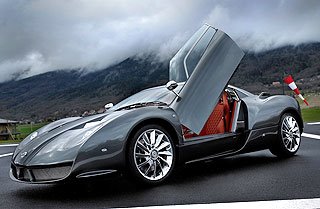
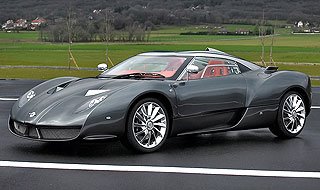
2007 Spyker C12 Zagato 42007 Spyker C12 Zagato2007 Spyker C12 Zagato 52007 Spyker C12 Zagato 32007 Spyker C12 Zagato 2 Geneva, Switzerland, 6 March 2007 Victor Muller, CEO of Spyker Cars, and Andrea Zagato, CEO of Zagato, today unveiled the Spyker C12 Zagato at the 77th Geneva International Motor Show. Norihiko Harada, Zagatos Automotive Chief Designer, and Muller co-operated closely to design this limited edition of 24 sports cars to be delivered from March 2008 onwards. The world premiere of this ultra-exclusive version of the C12 range celebrates Spykers entry into the world of Formula One and marks the first integration of design elements and styling cues from the Spyker F8-VII Formula One car into the Spyker road car range. This point was underlined by the unveiling of the car being performed by Spykers Formula One race driver, Adrian Sutil.

Partnership Spyker and Zagato

Victor Muller comments:

At the age of 18 I acquired my first Zagato bodied car: a Lancia Flavia Zagato rally car in dire need of restoration. Ever since that date, some 30 years ago, I have been in love with the unique and distinctive designs penned by this noble design house. Many Zagato bodied cars have followed the Lancia Flavia and I am proud to still have a number of Zagatos in my collection.

The co-operation and partnership between Spyker and Zagato is entirely logical if one looks at the rich heritage both companies share in the fields of aviation and racing. A better fit of aesthetics, skill and passion would be hard to find.

Two brothers, Jacobus and Hendrik-Jan Spijker, coach builders in Amsterdam, built their first Benzengined motor car in 1898 and won immediate acclaim for the supreme craftsmanship of their bodywork. In the period prior to World War I, a worldwide slump in the luxury car market meant that Spyker had to diversify its production, and so it merged with the Dutch Aircraft Factory N.V. This combined company evolved its business model and started developing and building aircraft. After the war Spyker was able to return to its roots and resumed car production in 1919. True to its motto Nulla tenaci invia est via (For the tenacious no road is impassable), Spyker continued building record-breaking cars which now featured extensive aircraft influences, including sophisticated aerodynamics absorbed from the aircraft building years.

Similarly, Zagato was established at the end of World War I by Ugo Zagato, putting aircraft industry construction techniques to use in the expanding market for passenger vehicles. Just like the Spyker cars, Zagatos cars were advanced in design and became synonymous with light weight and excellent aerodynamics.

Spyker C12 Zagato: the rationale

Victor Muller continues: Andrea and myself have known each other for many years and met at events such as Pebble Beach Concours dElegance and Villa dEste Concorso dEleganza on numerous occasions. Last April, at Villa dEste, we sat down and discussed the increasing market demand for truly one-off and limited edition super sport cars. In a certain sense the modern market is not unlike the 1930s, where wealthy customers would order exotic bespoke designs from high-end coach builders on Rolls-Royce, Bentley, Delage, Delahaye and Isotta-Fraschini chassis, just to mention a few.

Zagato established its name by designing exquisite cars for Lancia, Alfa Romeo and Ferrari in particular, but it is probably the Aston Martin DB4 Zagato that best represents the artistic expertise of what they do. Andrea and I agreed to meet each other in Arese and to define what a Spyker Zagato would have to embody. In view of market demand, it was decided to use Spykers flagship chassis, the C12, as a basis -its space-frame being exceptionally suitable for crafting a bespoke body onto.

After the initial design meeting in July 2006, it became apparent that Spyker would succeed in acquiring the Midland Formula 1 team and design activities were suspended until early October when that transaction had been consummated. With the F1 team part of the Spyker Group it was decided that the C12 Zagato should embody as many of the Formula 1 design cues as practically possible so as to set a new design vision for future Spyker road car models.

In the months following, Spyker and Zagato finalized the design and the manufacturing of the C12 Zagato was entrusted to Spykers long time fabrication partner, Coventry Prototype Panels in Coventry, UK. Under the guidance of Brendan OToole, CPPs Managing Director, and tienne Beijersbergen van Henegouwen, Spykers Project Manager, the vehicle was built by a dedicated Spyker and CPP crew from aluminium in an amazing 4 weeks.

Spyker C12 Zagato: the vehicle

The Spyker C12 Zagato is an all aluminium rear wheel drive sports car, based on the Spyker C12 Spyder. The C12 is powered by the 6.0 liter, 12 cylinder, 500 bhp W12 engine from Volkswagen AG and accelerates from 0-100 km (0-60 mph) in 3.8 seconds. The Spyker C12 Zagato is equipped with a six-speed manual or automatic gear box with F1 style shifting, Chronoswiss instruments and a Zagato designed full leather interior with brushed aluminium instrument panel. The C12 Zagato has an aluminium body with stainless steel roof rails and has many F1 derived design details such as an F1 nose, air scoop, chimneys, mirrors, rain light, fuel flap and diffuser. It has a panoramic roof that features the Double Bubble, a typical Zagato style element. The Spyker C12 Zagato has a length of 4.5 m, a width of 2.02 m excluding mirrors, a height of 1.25 m and weighs 1480 kg. The fuel tank capacity is 70 litres (15.4 gallons). Top speed is 310 km/h (193 mph).

The Spyker and Zagato Atelier brands perfectly align because of their common aeronautical origins and because of the shared passion of Victor Muller and myself for sports cars states Andrea Zagato. Nevertheless Victor, before starting this extraordinary adventure with Spyker, was a Zagato collector owning cars like the Flaminia SS and TZ. Together with our neo-classical approach, this Spyker C12 Zagato shows the capabilities of Zagato Atelier for innovative and non conventional solutions.

Norihiko Harada, designer of the new Spyker C12 Zagato, adds: All Spyker cars have their own very unique style: the aeronautical retrospective style co-exists with craftsmanship and elegance. The new Zagato body becomes even more unique, aggressive and sensual at the same time. It features a new double bubble panoramic roof , F1 influenced nose and air intakes, chimney and a coda tronca, the typical Zagato cut off tail end.

Maintaining Spykers styling philosophy, Zagato design put all these elements together and created an extremely stimulating example of contemporary exotic high performance sports car by using typical modern Zagato lines which started from the Raptor Zagato in 1996.

The Spyker C12 Zagato will retail for EUR 495,000 (excluding any taxes, ex factory).